Futurity
AI-powered B2B/2G automation platform
Bringing clarity and usability to AI workflows across B2B/B2G tools
Role
Product Designer
Timeline
Winter 2025-2026
Tools
Figma
Team
AT A GLANCE
Helped define the core product direction by clarifying the value proposition and core flows, shaping how automation, agents, and workflows come together.
Led the end-to-end UX and UI for a modular dashboard system that enables clients to configure, visualize, and manage AI-powered workflows.
Translating stakeholder insights from interviews directly into product decisions. Collaborated closely with engineering + leadership to iterateand ship the product.
Context
Futurity is an AI focused company registered in Singapore building enterprise-grade tools for automation and workforce learning across B2B and B2G organizations. Its platform brings together AI agents, conversational chat interfaces, and configurable workflows to help teams scale operations efficiently. Although Futurity serves a global market, I worked closely with the founding team in person in Vancouver, where the founder is based, collaborating directly with engineering and leadership throughout the design process.
While I contributed across multiple areas, my most impactful work focused on defining the UX and UI for a modular dashboard system that enables clients to configure, visualize, and manage AI-powered workflows. I led the design of end-to-end user flows and interface patterns that translate complex automation logic into clear, intuitive experiences for enterprise users. This involved shaping how AI workflows are structured, how modules and widgets are composed, and how users understand system state, permissions, and outcomes within a B2B/B2G environment. Through iterative prototyping, close collaboration with engineers, and stakeholder interviews, I helped ship this product into production, supporting deployments in government-level and public-sector solutions.
From Client Need to Scalable Platform
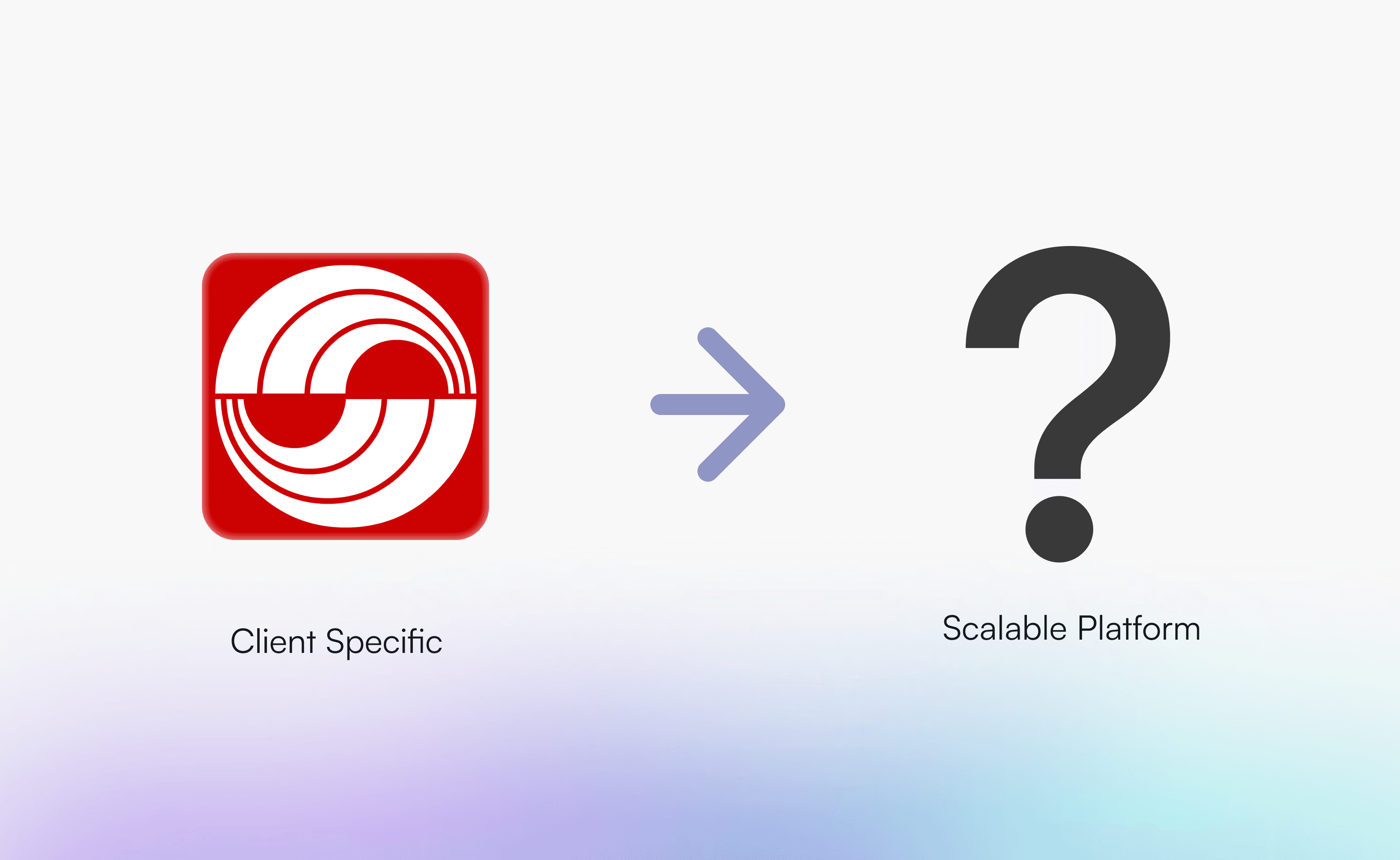
The product originated from a client-specific engagement with Sinar Mas, a large Indonesian conglomerate with complex, cross-departmental needs. Their teams, spanning marketing, legal, and logistics, required highly configurable dashboards tailored to different roles, permissions, and workflows.
Problem Statement
How might we design a modular, intuitive interface that allows enterprise teams to configure, visualize, and understand AI-powered workflows, all while remaining scalable across B2B and B2G environments?
A Scalable, Modular AI Automation Platform
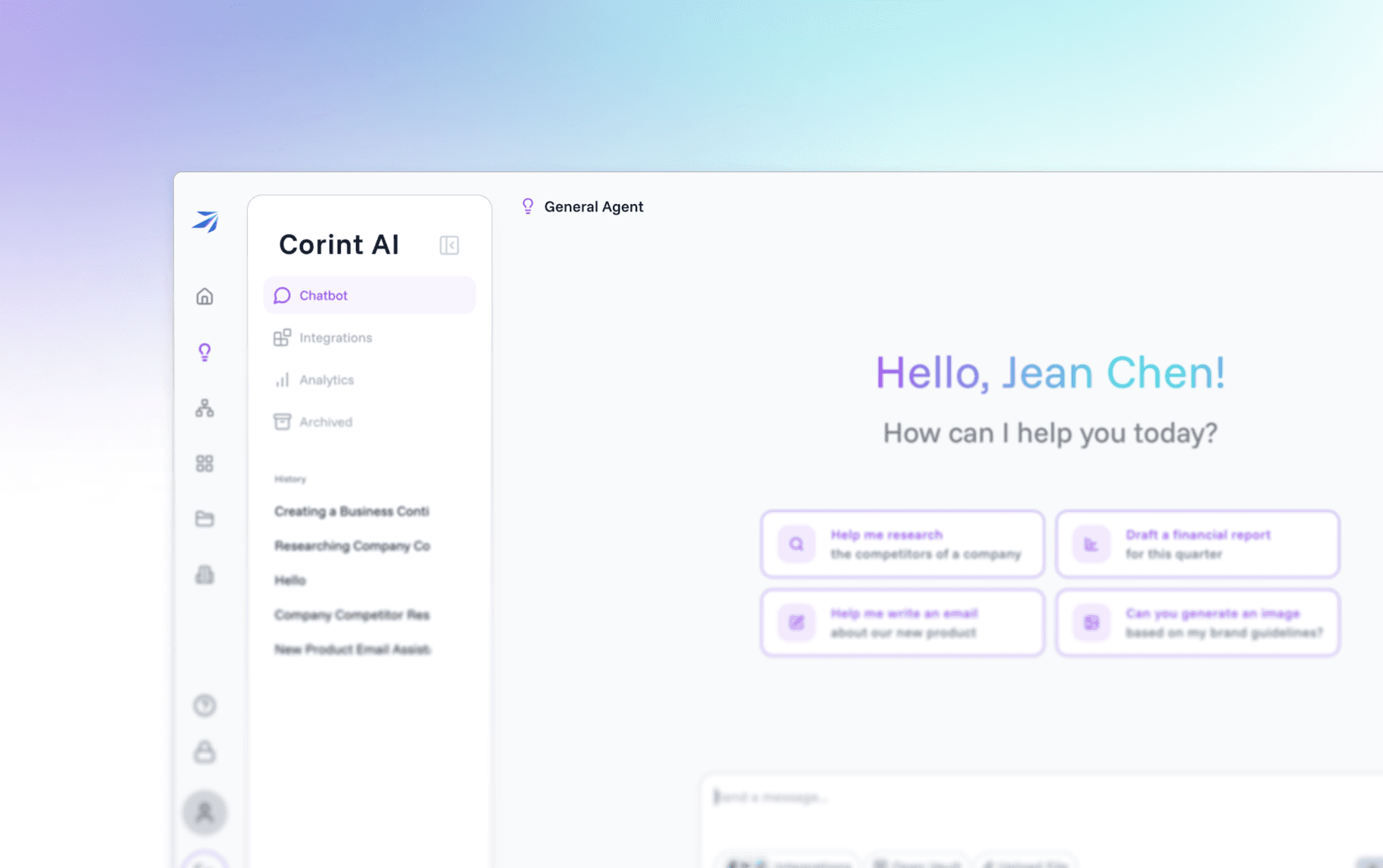
01 Integrated AI Assistant at the Core of the Platform
Integrated AI Assistant accessible directly from home
02 A Configurable Dashboard Built for Scale
Configurable, modular dashboard that adapts to different roles + operational needs
03 Comprehensive Widgets Library
A modular set of widgets designed to visualize AI workflows and enable quick, in-context actions across enterprise dashboards.
***Details related to widget generation have been temporarily omitted due to confidentiality.
04 Other Screens
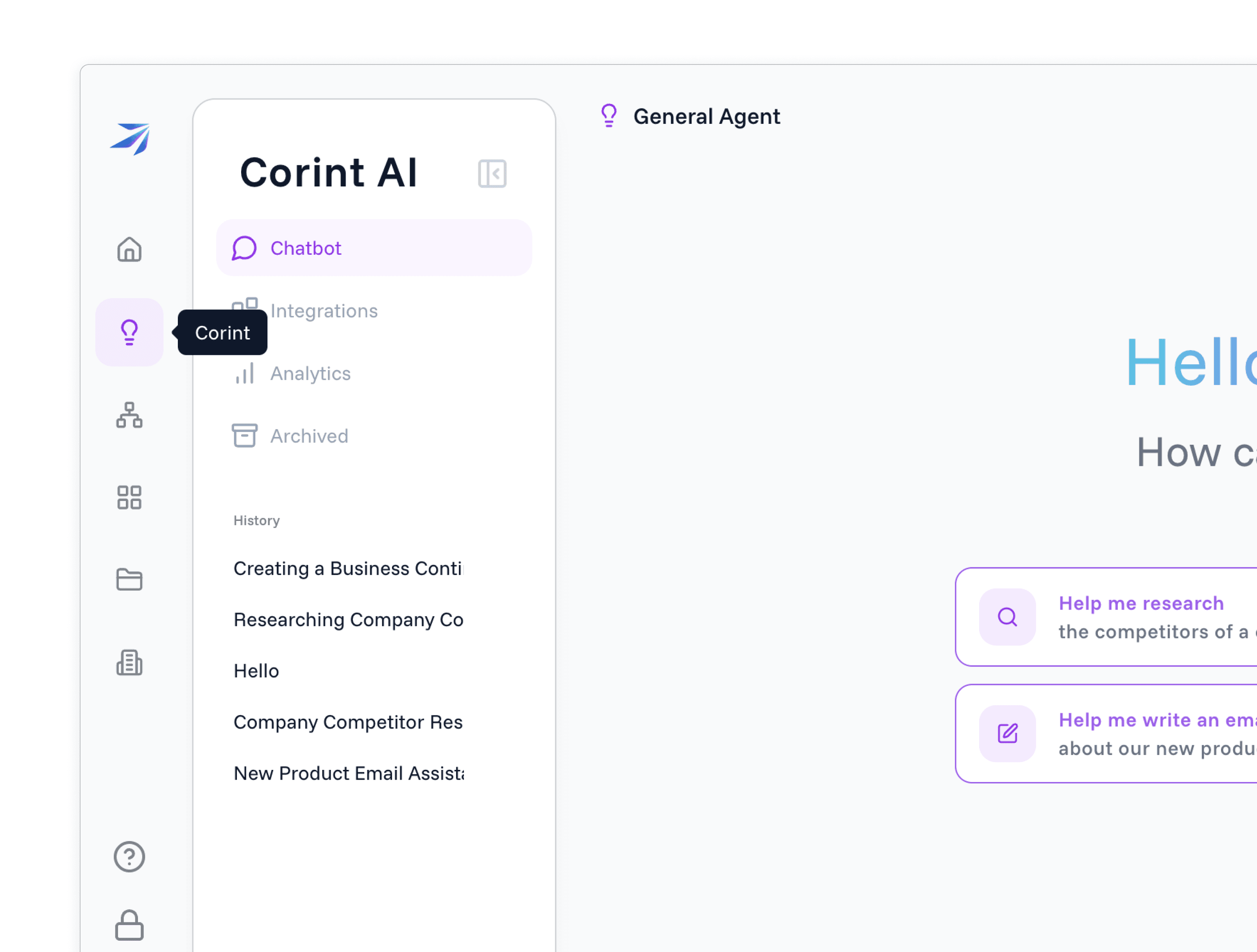
Sidebar Redesign
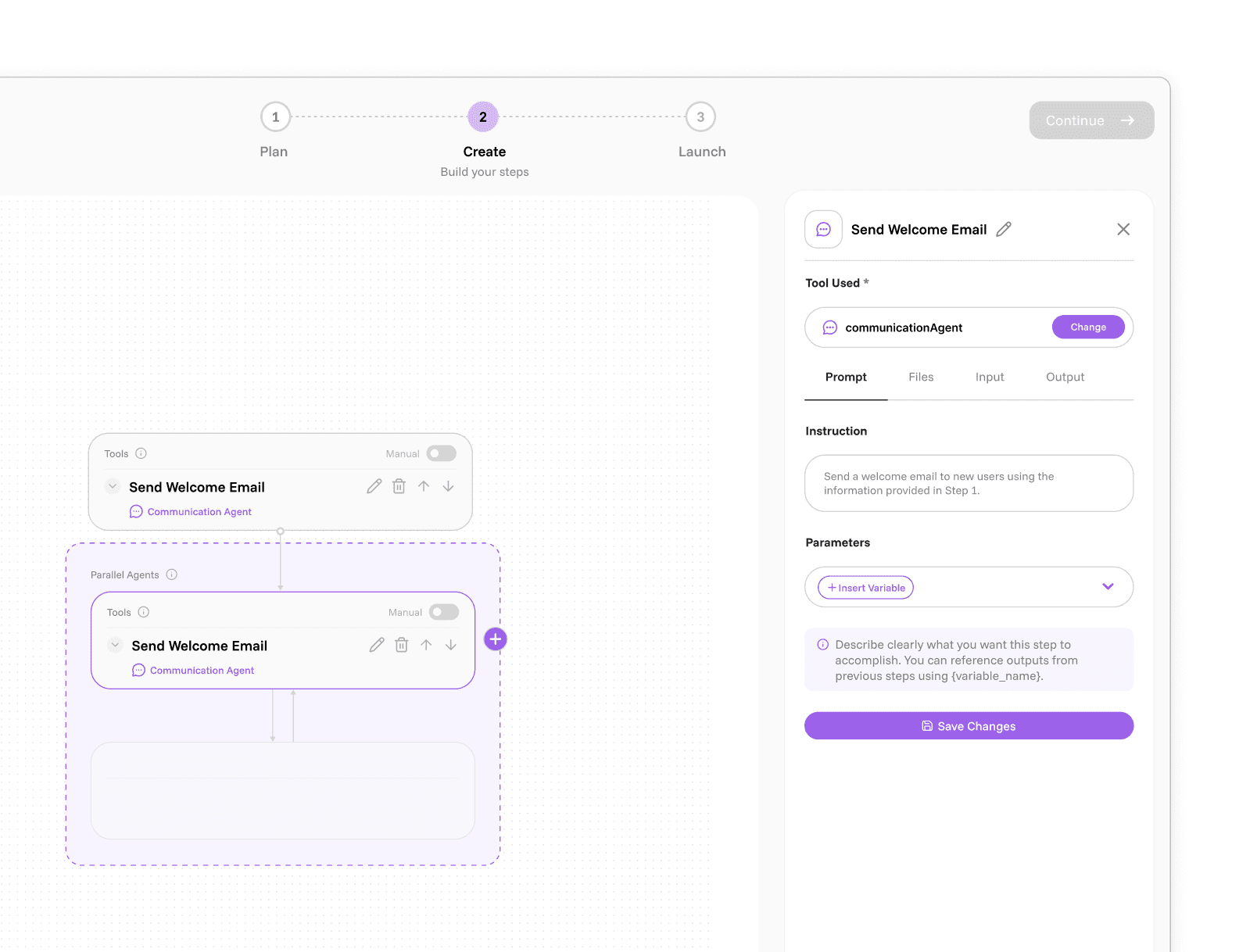
Concurrent Agent Workflow
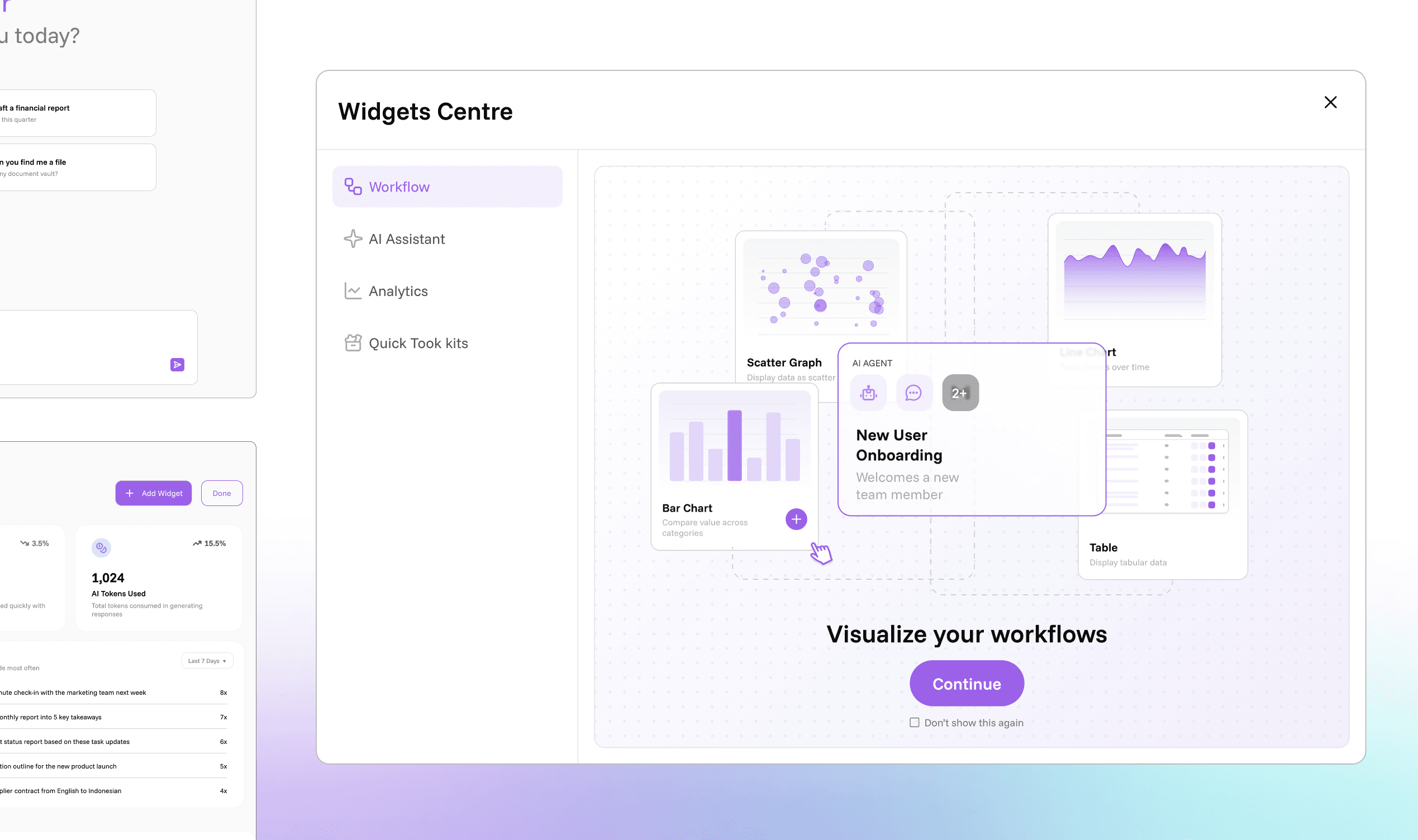
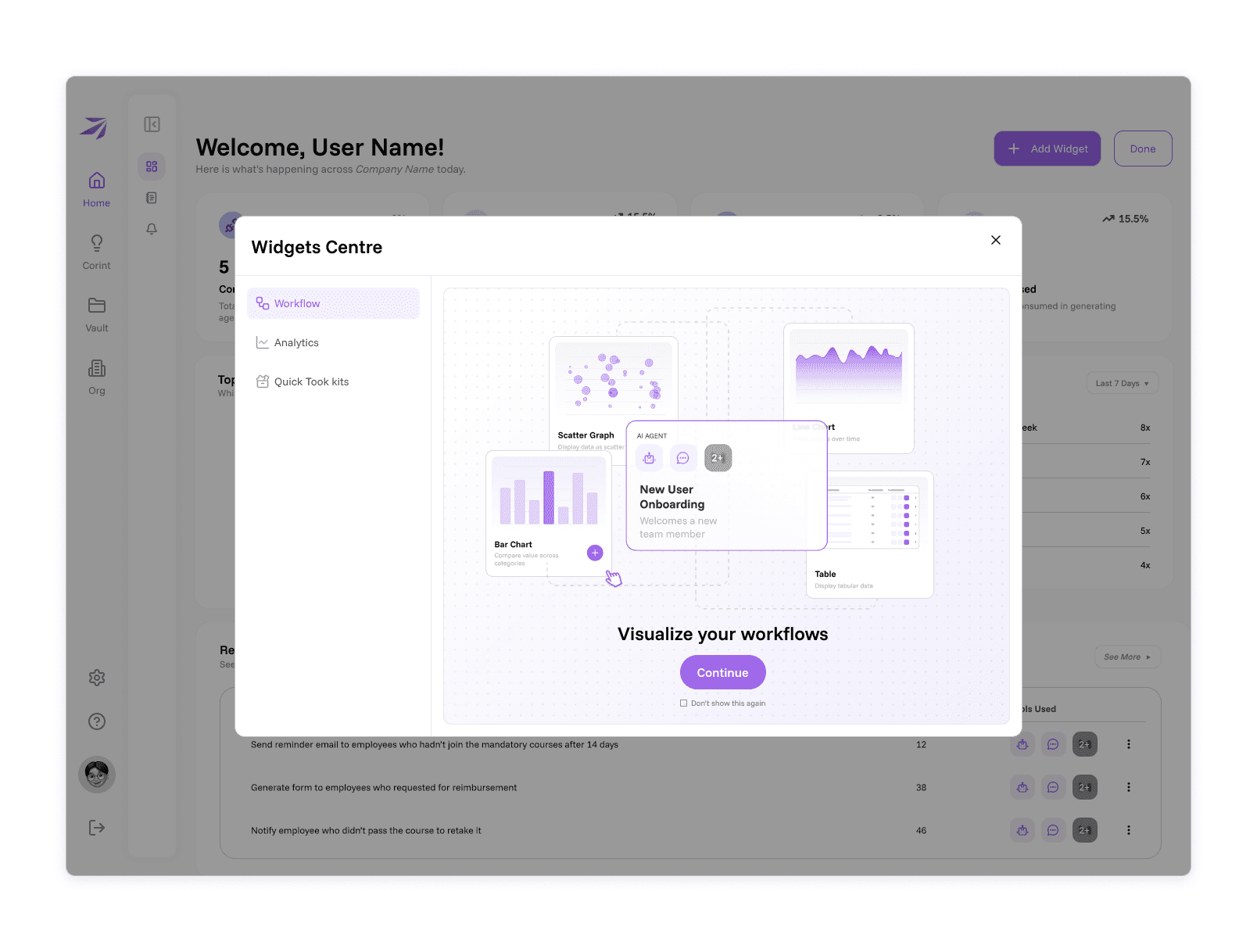
Widget Centre Onboarding
Grounded in Real Enterprise Needs
Design Process
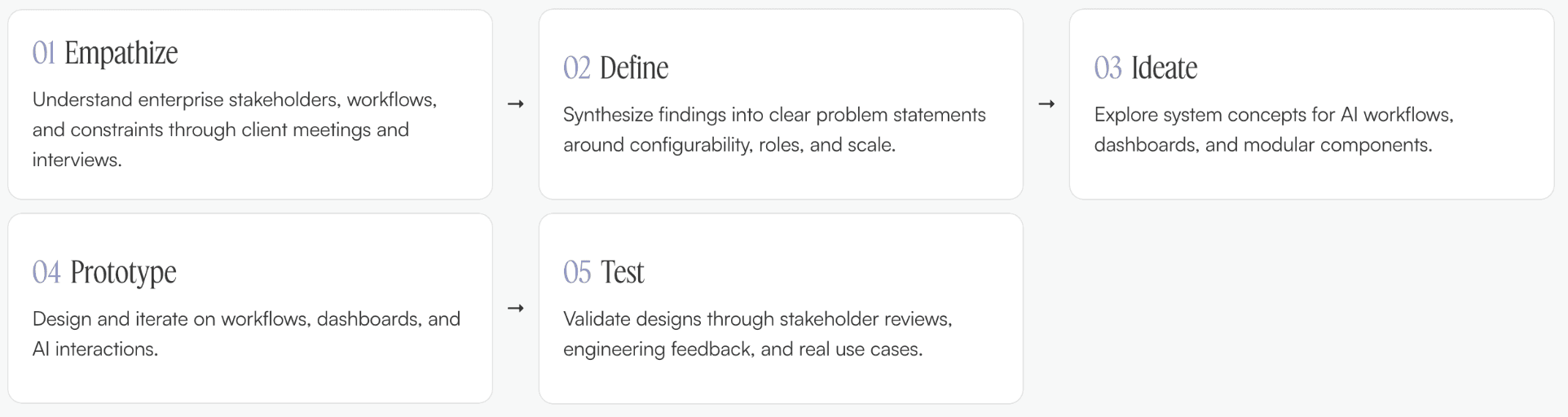
01 Empathize
Client Meeting Notes
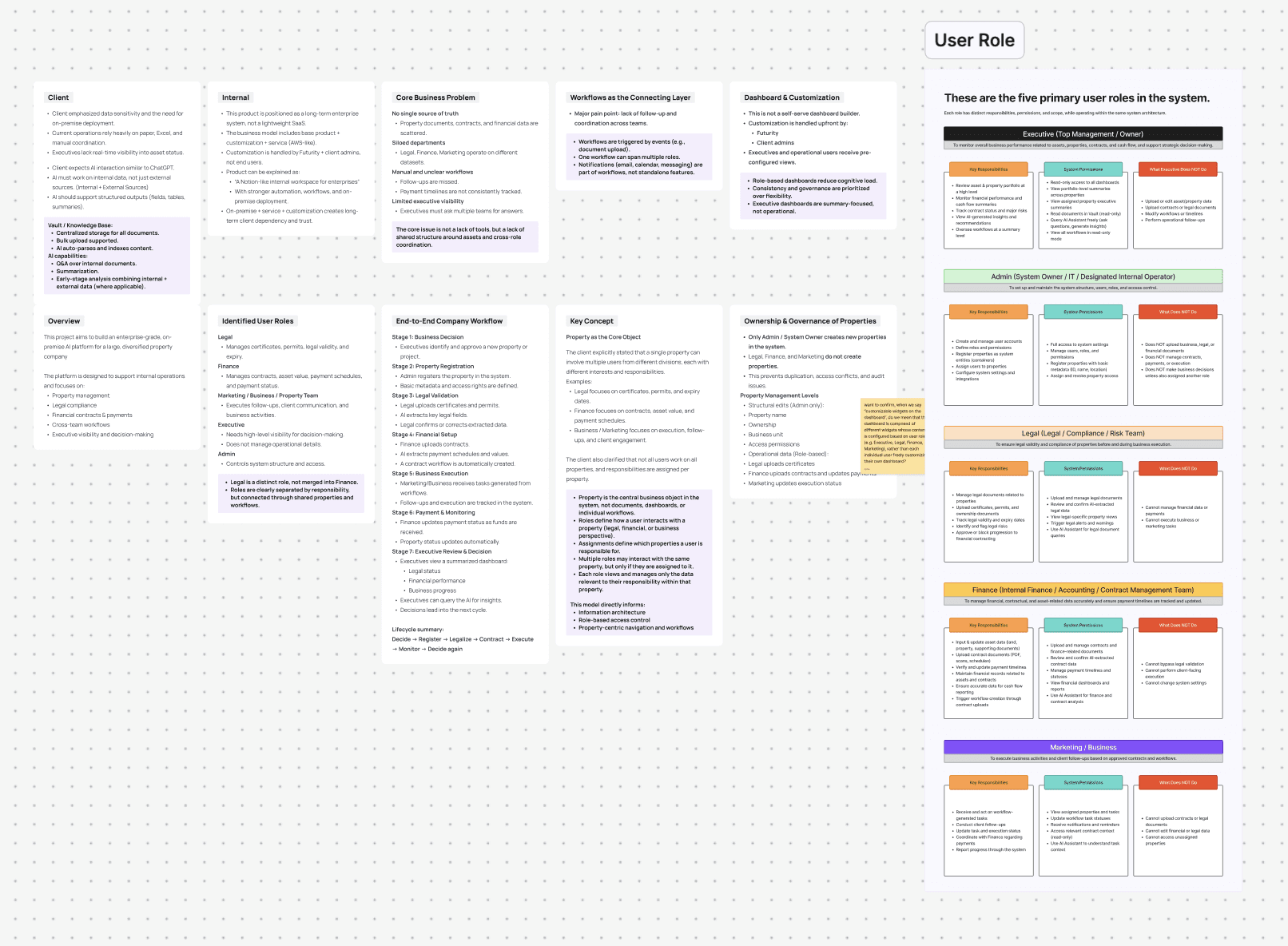
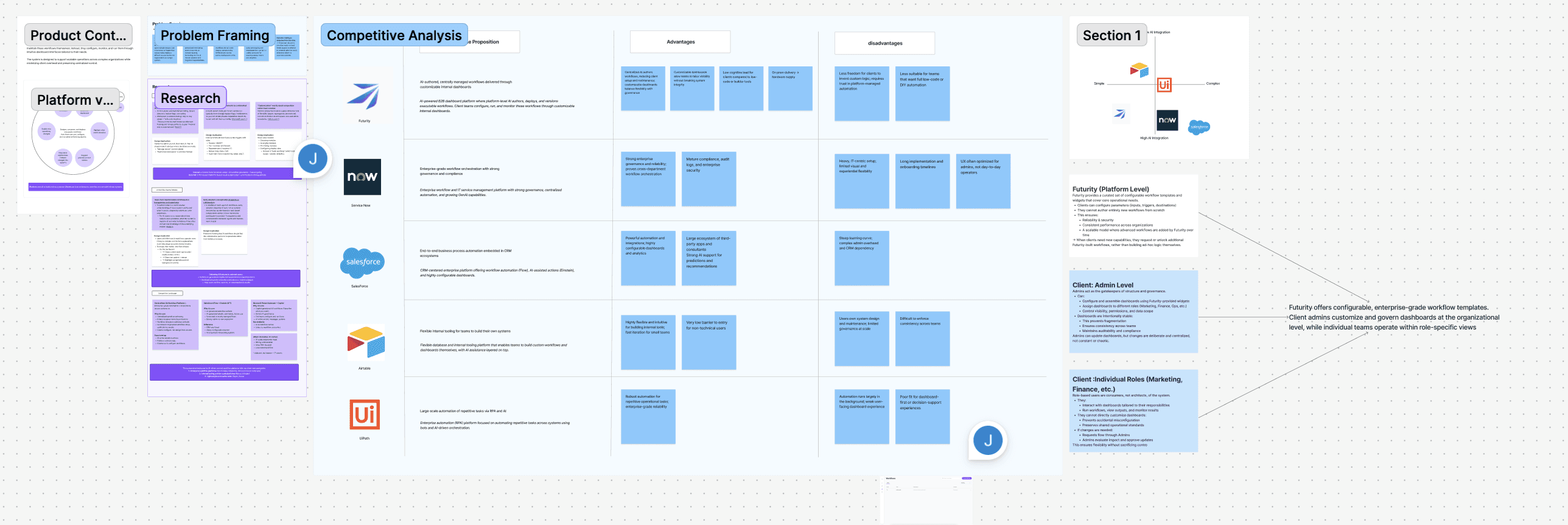
Following a cross-functional client meeting with stakeholders from the Sinar Mas Group, Aydie and I documented workflows, constraints, and open questions to inform product and system design.
Building on these insights, I conducted additional research to frame the problem space and evaluate comparable enterprise platforms, helping clarify Futurity’s positioning and inform scalable design decisions.
02 Define
Key Insights
01 Disconnected Tools Limit Visibility and Accountability
Siloed systems across finance, marketing, property, and other business units made it difficult to track progress, follow up on tasks, and maintain shared visibility across the organization.
02 Lack of Real-Time Monitoring Creates Operational Risk
Without live updates or automated tracking, critical changes and tasks were often missed, slowing decisions and increasing manual overhead.
03 Scale Requires a Unified yet Configurable Platform
A large, diversified organization needs a single integrated application that supports multiple teams and workflows without sacrificing flexibility or role-specific control.
03 Ideate
System Architecture & User Flows
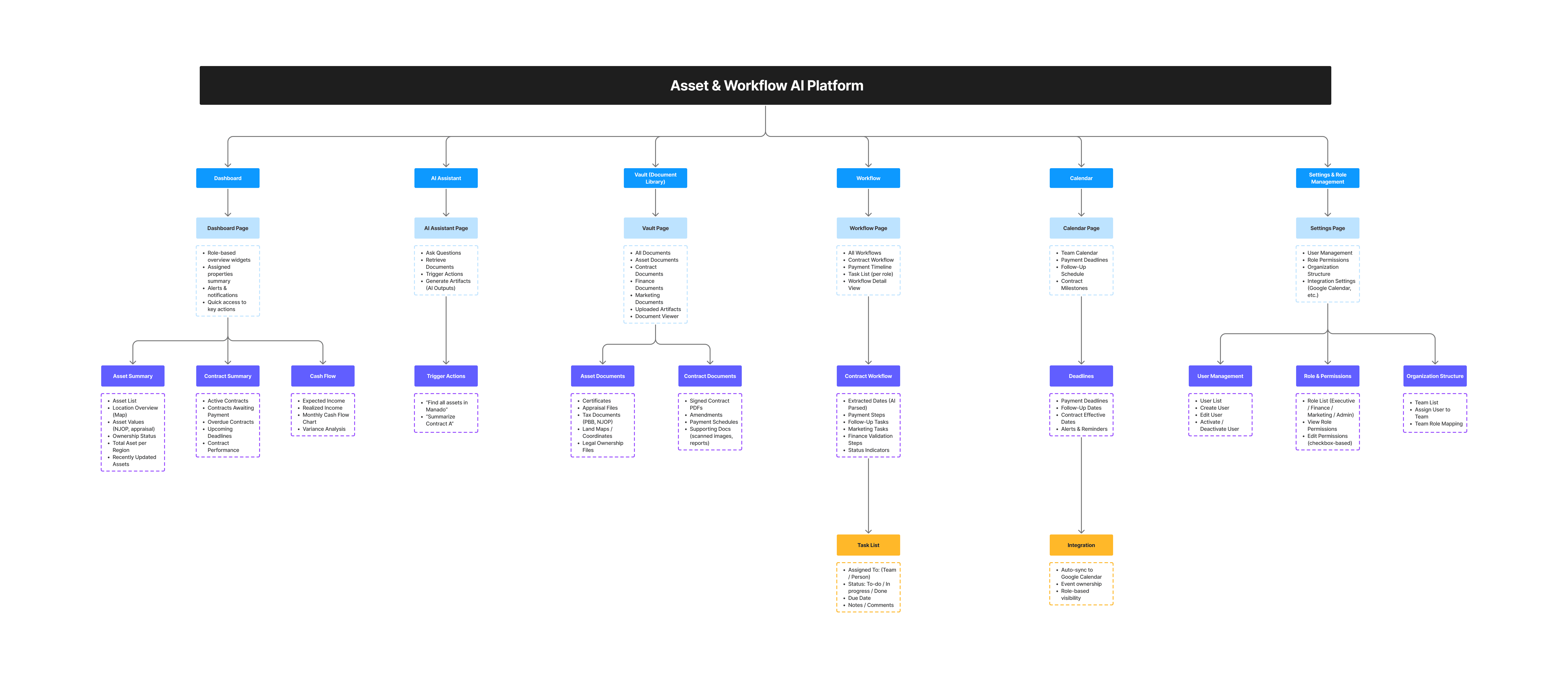
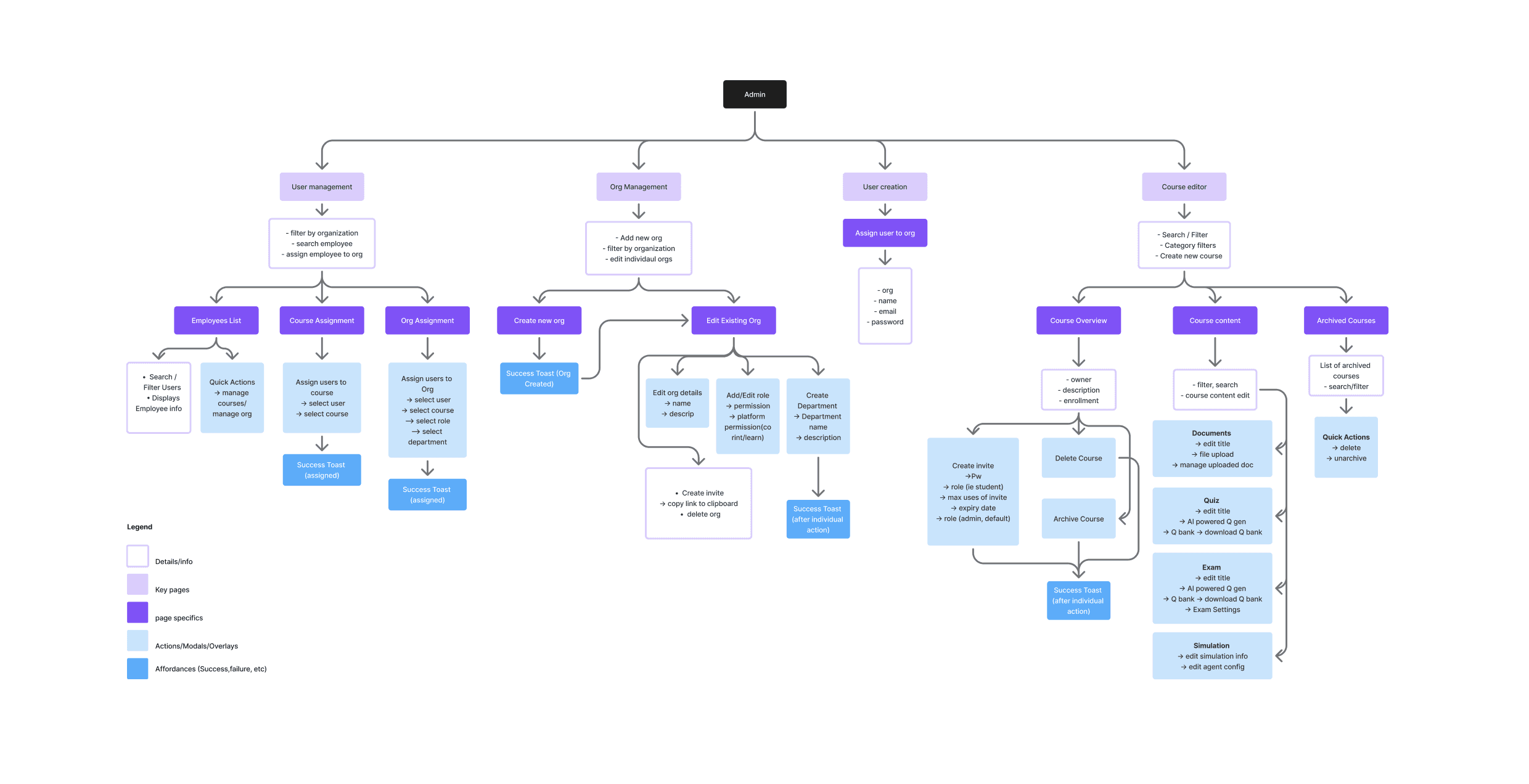
***Detailed user flows are not shown due to confidentiality.
04 Prototype
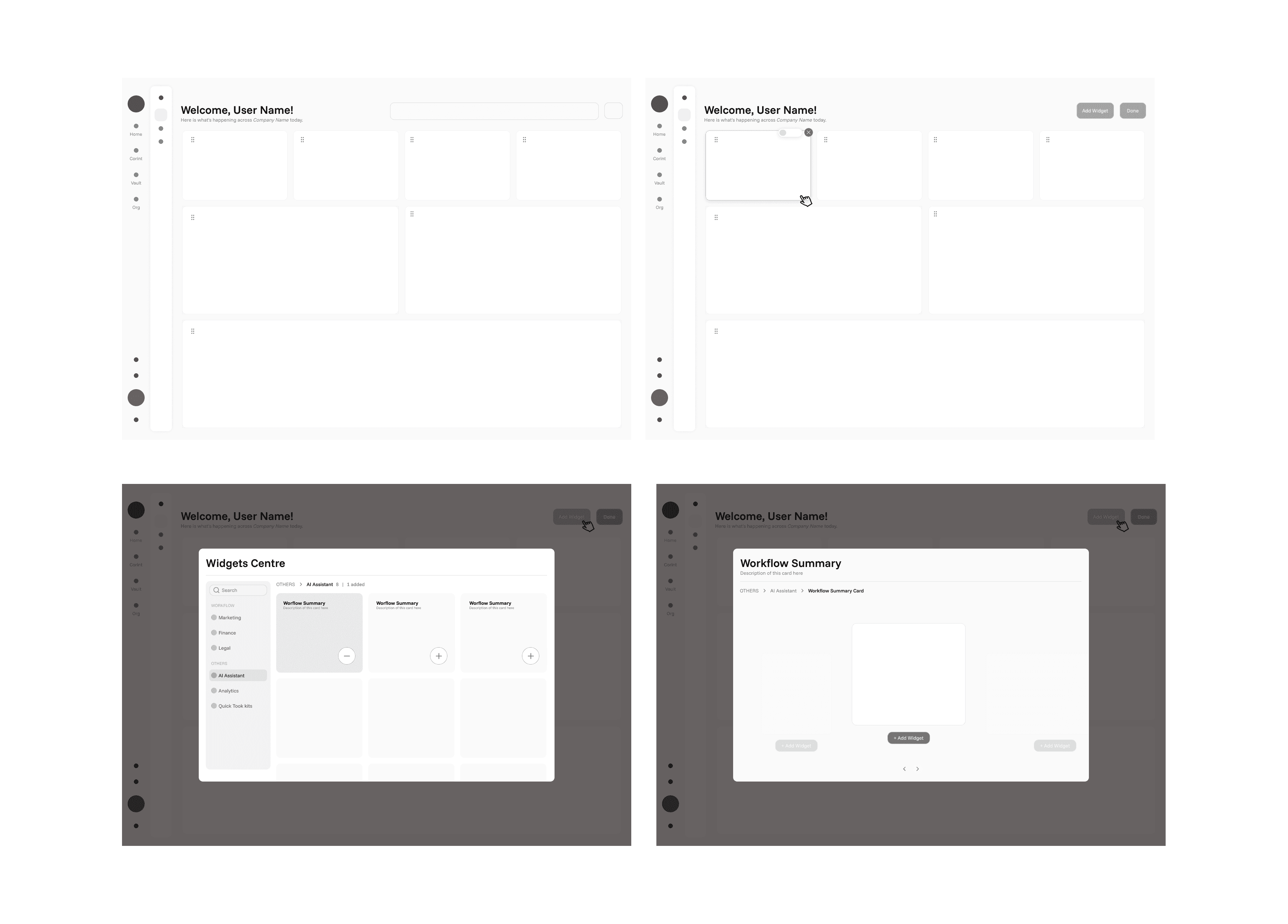
Lofi Prototyping
Dev Friendly Flow mapping
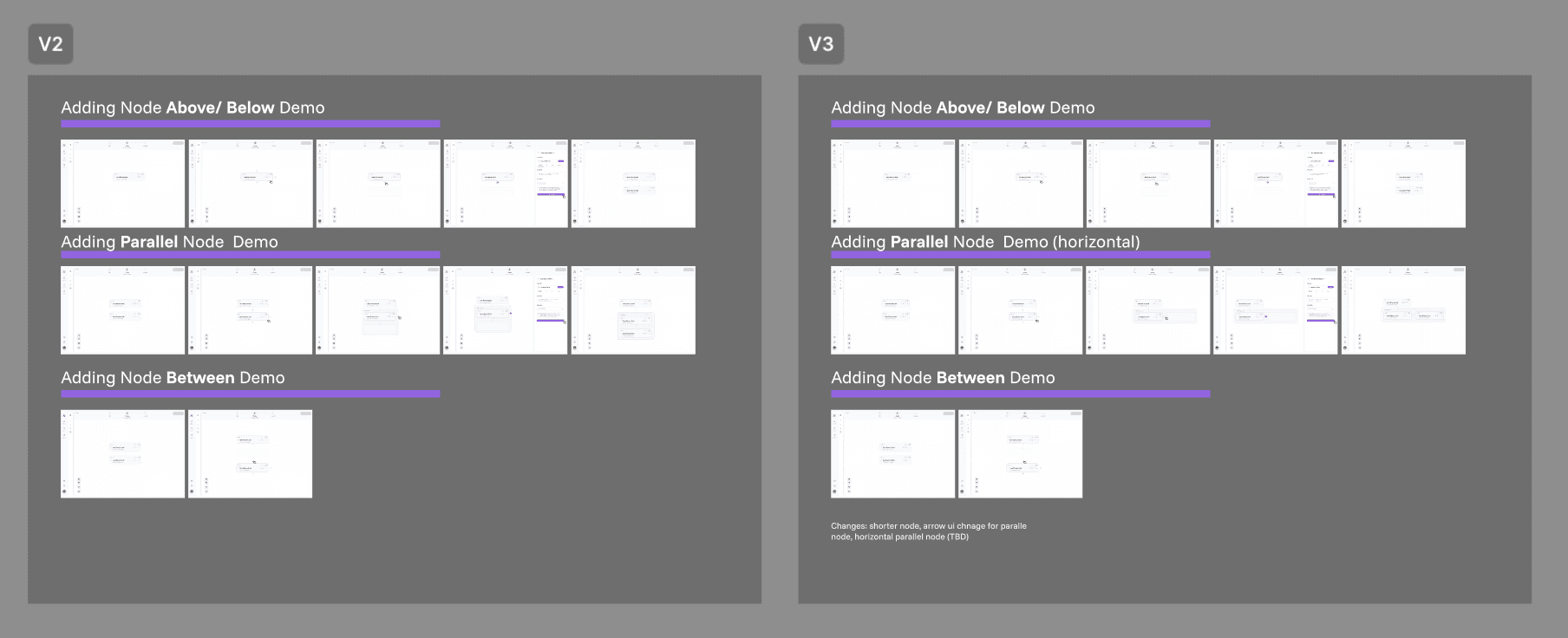
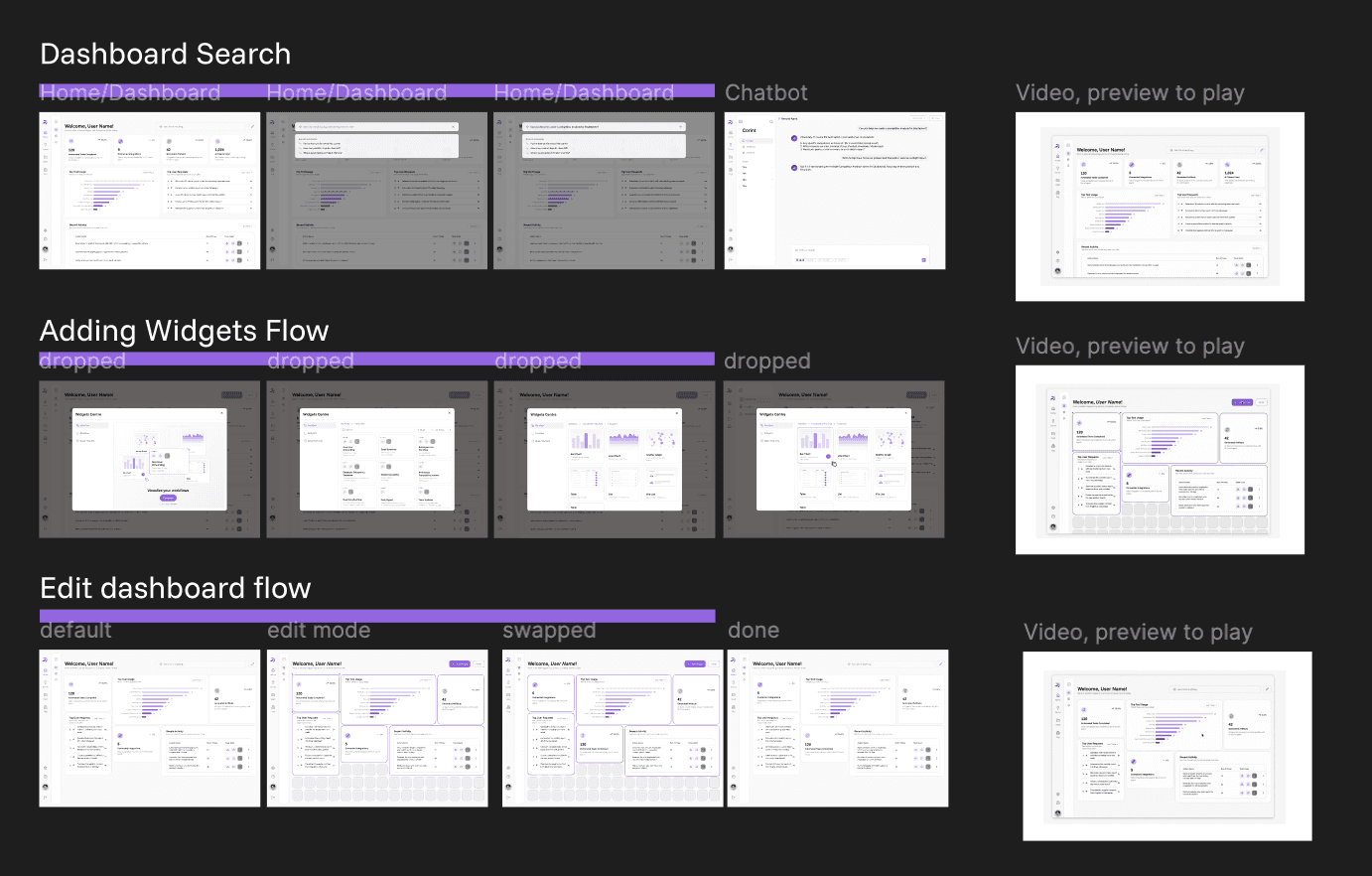
Throughout the prototyping stage, I used rapid low-fidelity prototypes to explore ideas and structured designs as clear, end-to-end flows so engineers could easily understand system logic and implementation requirements.
05 Test
The platform is actively being tested through ongoing demos with enterprise and public-sector partners. I work closely with engineering, leadership, and design to rapidly iterate on workflows, interfaces, and system behavior, using real feedback to refine and expand the platform as it continues to grow.
Key Takeaways
Key Insights
Designing for One Enables Scale
Grounding decisions in a real client revealed the patterns and constraints necessary to build a scalable platform.
Collaboration Shapes Better Products
Working closely with the team reinforced how strong cross-functional collaboration accelerates iteration.
Grateful for…
Working on this project has been an incredibly meaningful experience for me. I’m deeply grateful for the level of trust placed in me to help shape a product that is actively being demoed and positioned for real enterprise and public-sector use. Being able to contribute to decisions that affect how large organizations operate, alongside experienced designers, engineers, and leadership, has been both humbling and motivating.
Designing this platform taught me how real products are built at scale. Starting from a client-specific need and evolving it into a scalable platform pushed me to think beyond individual screens and focus on systems, workflows, and long-term extensibility. I learned how important it is to distinguish between what must remain flexible and what should be standardized, especially in complex B2B and B2G environments.
This project also significantly deepened my understanding of product design as a whole. Working closely with engineering and leadership reinforced the importance of clear communication, structured flows, and implementation-ready design. Laying out designs as end-to-end flows not just interfaces helped enabled faster iteration and alignment. Overall, this experience strengthened my confidence in designing under real constraints and taught me how to design real, production-bound products through hands-on collaboration and iteration.
Thank you team!!!